
Summer SoderBlurb #2
Living, Teaching, Writing, Reading

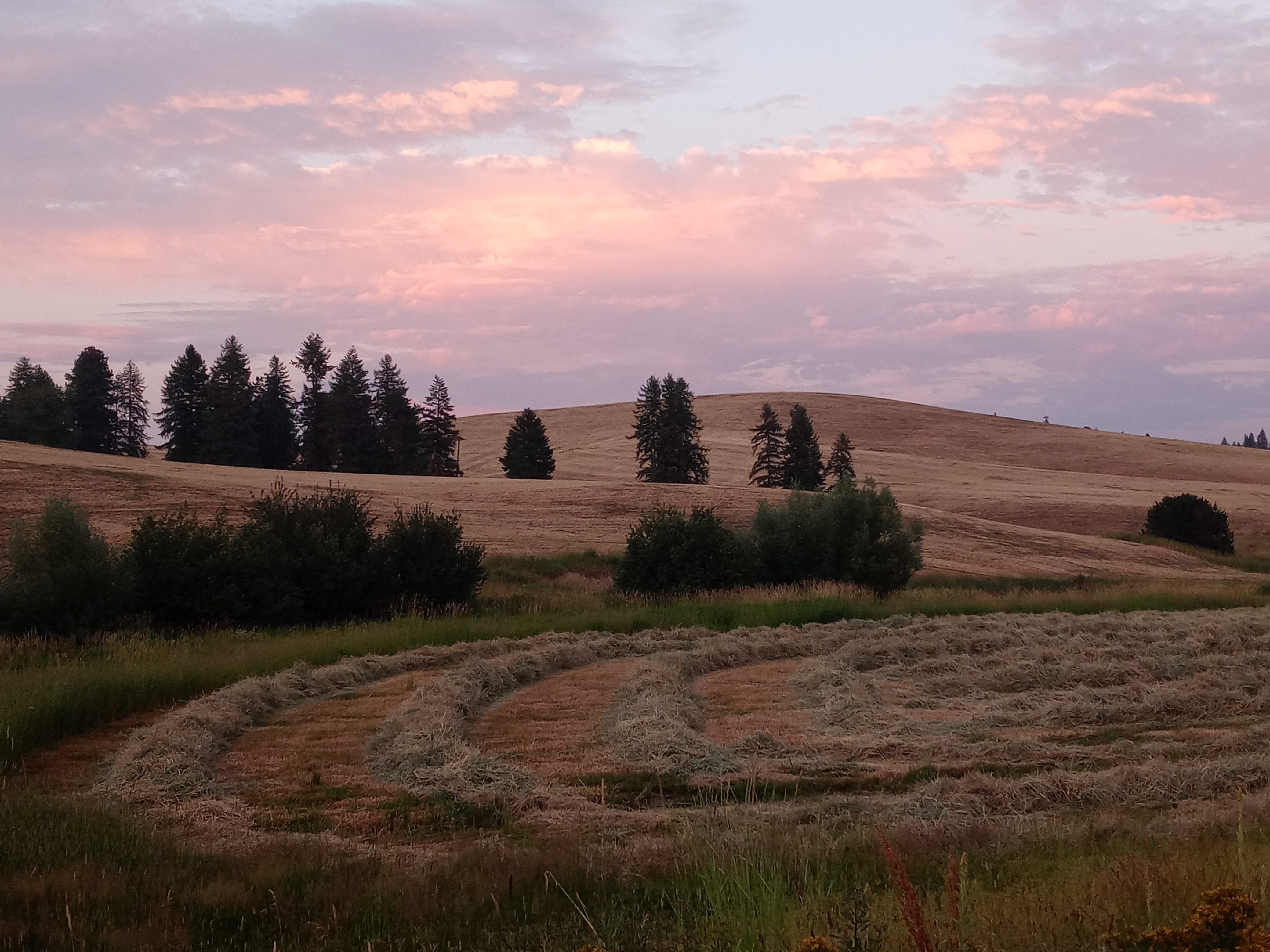
After traveling most of last summer (see an earlier post—“A Summer Whirlwind”), this summer has been a wonderful time to catch up on some reading, pursue writing projects, prepare for another year of teaching (and organize the disaster zone of our house, otherwise known as “the garage”). Our family took a few days trips (picture above is after a day at a local lake), enjoyed church family camp in the mountains, and celebrated another round of birthdays and anniversaries, including my parents’ 50th! We are so grateful for their years of faithfulness and commitment to each other.
Classes and Such
This year I’ll continue serving as the Lead Teacher for the upper Integrated Humanities courses at Logos Online School. I’ll be teaching sections of Integrated Humanities 3 (Medieval-Reformation) and IH 4 (Modern), as well as an Apologetics class. In addition, I’m offering a Rhetoric: Fitting Words class again at Kepler Education.
Another fun project has been the Summer Scholars Series, sponsored by the Consortium of Classical Education and Kepler Education. We hosted free Zoom events featuring scholars talking about great texts such as John Milton’s Paradise Lost, Dante’s Divine Comedy and an August slot still TBD (there’s still time to sign up for it!). Scholars like Dr. Jayson Greiser (New St. Andrews College), Dr. Peter Johnston (Anglican Compass), and Joe Carlson (translator of Dante) guided participants through these classic texts, focusing on tools and tips to prepare them for teaching, or simply reading, these books in the coming academic year.
At Redemption Seminary I continue to learn a lot from the weekly mentoring sessions with my students. It’s wonderful to be able to be part of the learning process for people who may not necessarily be pursuing ordained ministry (though many are), but who are all seeking to gain knowledge, wisdom, and understanding and use their gifts to serve others. It’s been particuarly satisfying to mentor older adults who are choosing to pursue seminary studies, instead of playing golf everyday. I’ve enjoyed learning from their life experiences. If you’ve ever wanted to learn more about the Bible, or dig deep in theology or church history, consider taking a course at Redemption! The cost is low, and you can study in your own context, at your own pace. I’d love to help mentor you.
Publications
“Feasting in the Kingdom” - The Big Picture, Issue 7, Trinity 2023
“The Christian Compassion Revolution” - Salvo Magazine Blog
I have two book reviews in the latest edition of the Journal of Reformed Theology: Heinrich Bullinger: An Introduction to His Life and Theology, by Donald K. McKim and Jim West and A Companion to the Reformation in Scotland, ca. 1525-1638, by William Ian P. Hazlett, ed.
I also published a revised version of part of my New St. Andrews bachelor’s thesis in Consortium: A Journal of Classical Education (Summer 2023, Vol. 2, Issue 1). It is available for order in hard copy, but will eventually be online for free.
Speaking of which, we are now accepting submissions for the Winter edition of The Consortium! The Winter edition will be devoted to “Truth” in classical Christian education. Deadline for submissions is Sept. 1, 2023.
Reading Gleanings
One of the best articles I’ve read recently is Nancy Pearcey’s article, “Common Good Men,” in Touchstone. Pearcey shows how work, marriage, and church changed in the modern world. Men went to work outside the home, boys were left fatherless, and aggressive and competitive masculine characteristics were rewarded in the workplace. The church responded by first catering to and exalting women and feminine spirituality, and then stressed “Muscular Christianity.” Pearcy also debunks myths about how conservative Protestant men are more likely to be more abusive.
One reason I love teaching history is that I get to explode myths and dispel half-truths for my students. Here’s one: “Almost no educated person in the Middle Ages believed the Earth to be anything but round. This was clearly proven by the fact that tall ships sailing toward the horizon disappear over that horizon with their masts still visible, returning to report the sea flat. Thus, legends regarding Columbus bravely proving the world round are just that: legends,” (The Encyclopedia of the Middle Ages, “Astronomy”).
On another note, I’m working slowly through Blaise Pascal’s Pensees. I came across this, and it immediately made me think of how we use social media today: “We are not satisfied with the life we have in ourselves and our own being. We want to lead an imaginary life in the eyes of others, and so we try to make an impression. We strive constantly to embellish and preserve our imaginary beings, and neglect the real one … We would cheerfully be cowards if that would acquire us a reputation for bravery” (#806). Pascal was a devastatingly insightful cultural critic, and wrote a lot about “distraction”—that uniquely modern itch to do something (anything!) rather than face the reality about ourselves, and our universe. In Pascal’s time, “distraction” was something that only the rich and royals could worry about. Everyone else was too busy just trying to stay alive. But now, everyone has the luxruy of being “distracted.” There’s probably an article, or book, there. What would Pascal say to people today, as they mindlessly scroll through Instagram reels?
I’m really enjoying Alan Kreider’s The Patient Ferment of the Early Church: The Improbable Rise of Christianity in the Roman Empire. It’s full of insights about how the early Christians lived their lives differently than the surrounding Greco-Roman cultrue, and how their radically counter-cultural lifestyle (“habitus”) was attractive and compelling to their pagan neighbors. Here’s one of the key takeaways: “Unlike many churches today, the third-century churches described by the Apostolic Tradition did not try to grow by making people feel welcome and included. Civic paganism did that. In contrast, the churches were hard to enter. They didn’t grow because of their cultural accesibility; they grew because they required commitment to an upopular God who didn’t require people to perform cultic acts correctly but instead equipped them to live in a way that was richly unconventional” (Kreider, 149). This book is a challenge for us to remember that the Gospel calls us live in a way that is noticeably different than our non-Christian neighbors. This will be either attractive, or will bring persecution. The early church can remind us of how to be faithful in both eventualities.
What comes to your mind when you hear the word “Puritan”? Harsh? Judgmental? Strict? Hypocritical? Weird clothes? What about “poetic”? Probably not. They wanted to “purify” the Church of England, according to their understanding of what the Bible taught about worship and church government. The Puritans were intensely concerned to pursue spiritual and moral purity. Their intensity produced some powerful writing. Beyond actual Puritan poets like Edward Taylor and Anne Bradstreet, Puritan prose could also be quite powerful, and even poetic. I’ve been slowly reading through Stephen Charnock’s works, and this passage jumped out at me because of its rhetorical power. He is describing the sacrifice of Jesus on the cross:
This sacrifice unites all the attributes of God together for a believer’s interest. The flood-gates of mercy are opened, and the fire of justice confined to its flames. The flames of the one centre in Christ, that the streams of the other might flow down to us; rivers of mercy quench not the flames of justice, nor the flames of justice suck up the rivers of mercy … Both justice and mercy join hands to help the fallen creature up. God is just in being merciful, and merciful in being just …” (Charnock’s Works, vol. IV, “Christ Our Passover,” 537).
I love reading old books because they had such a passion for truth, and a desire to express truth in a beautiful way.
That’s all for now—see you in the next edition of The SoderBlurb!